Transparent LED Screens for Glass Facades: What Retail Buyers Should Check First
Buying a transparent LED screen for a glass facade or shop window? Check transparency, brightness, mounting side, viewing distance and service access first — before you compare prices.
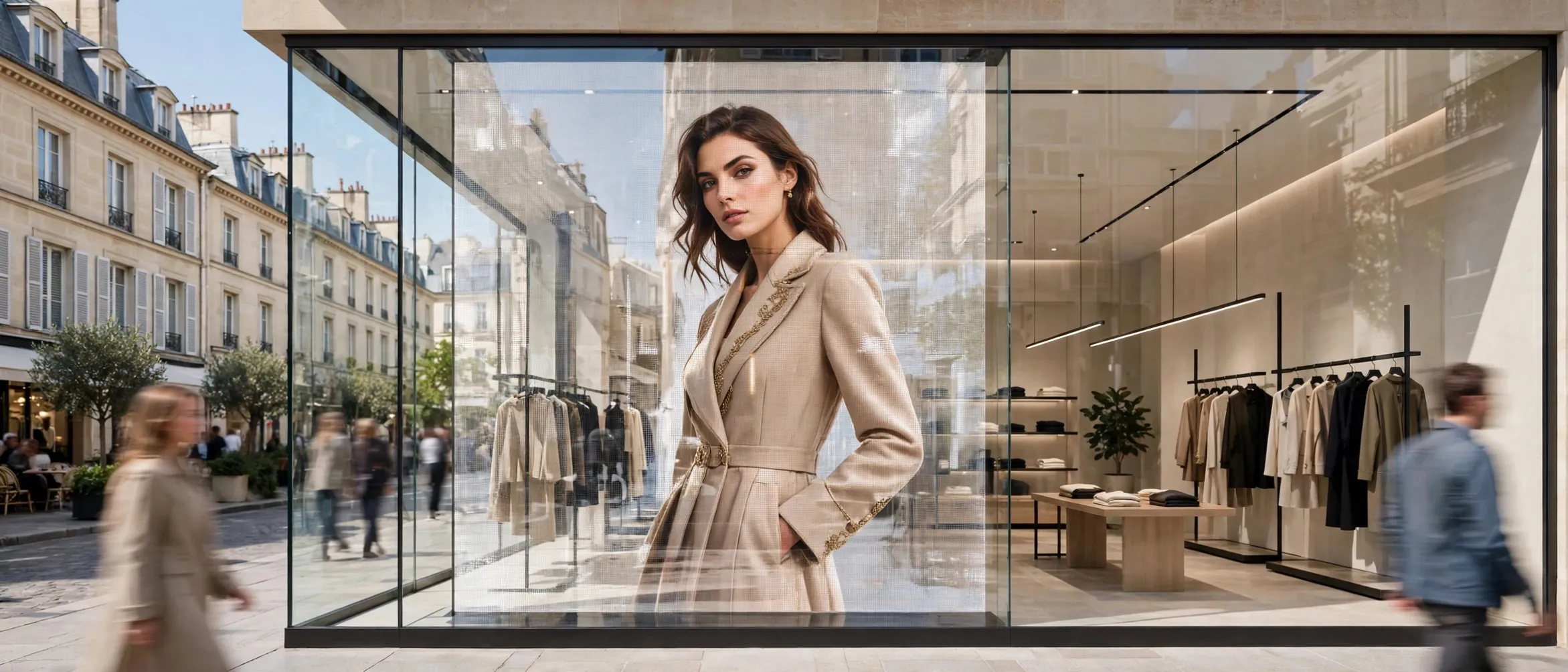
A shop window has two jobs, and they pull in opposite directions.
It has to let daylight in and let people see inside. And it has to sell — showing video, offers and brand content to everyone walking past. A transparent LED screen is the one product that tries to do both at once. Whether it succeeds depends on five checks made before the order, not after the installation.
Our earlier guide compared the three transparent technologies — grille, crystal film and photoelectric glass — and when to use each. This guide assumes the common retail case, a grille screen on a glass facade or storefront, and covers what to check before you buy one.
1. Transparency and Brightness Have to Be Chosen Together
Transparency is the share of light that passes through the screen. Brightness is how hard the picture fights the daylight. They move against each other, so neither number means much on its own.
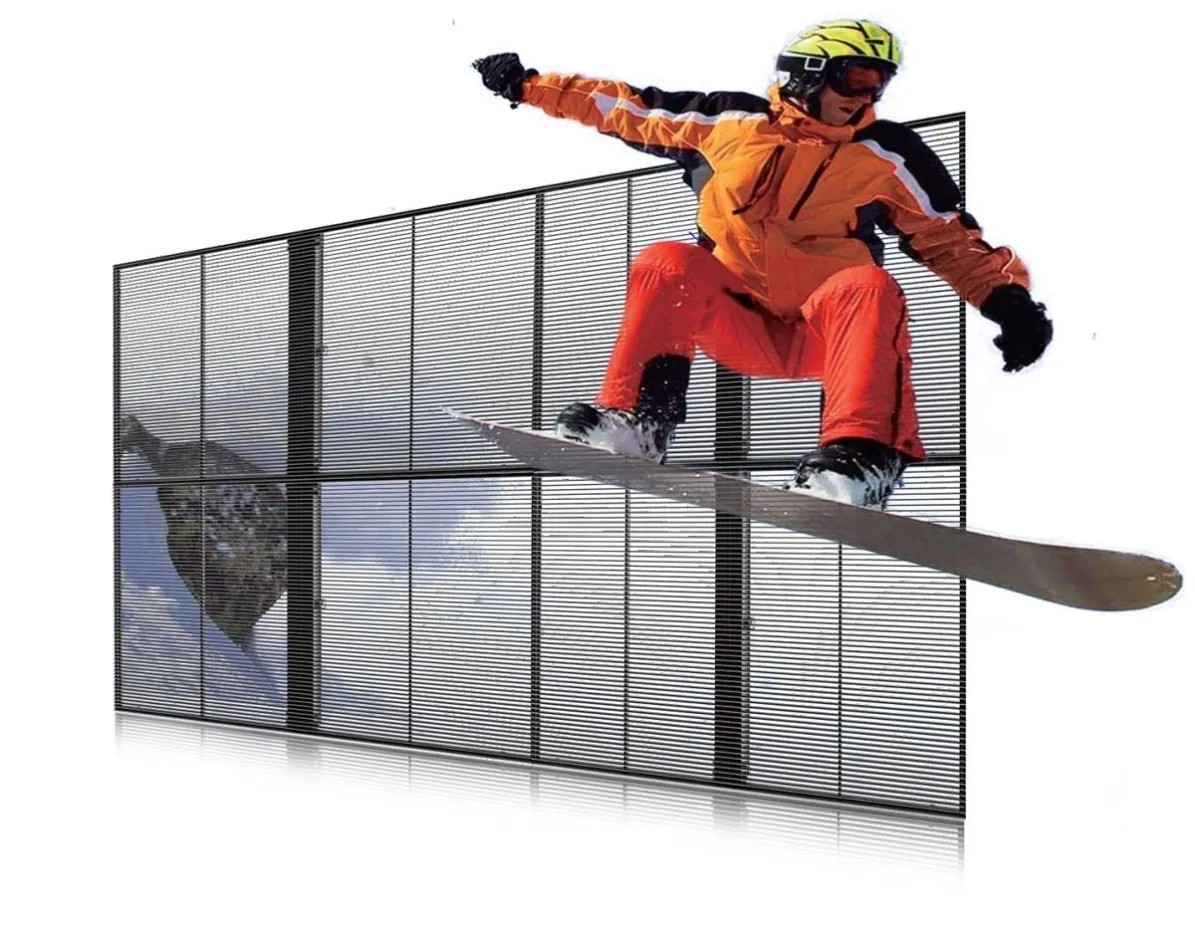
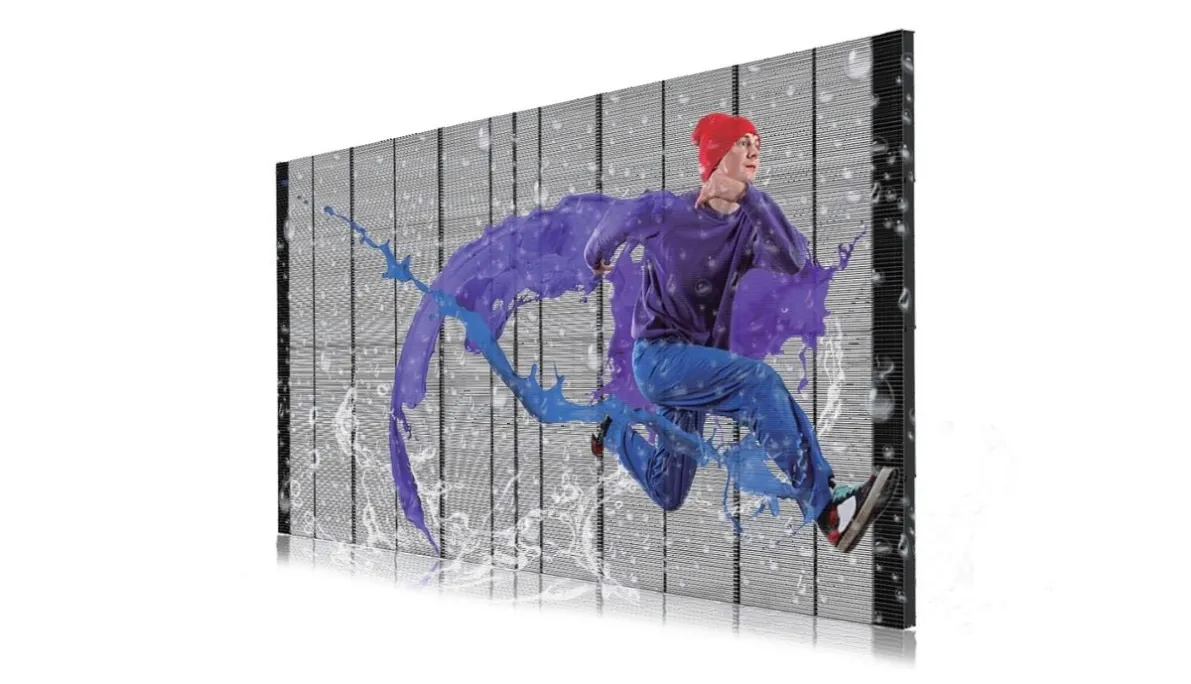
An indoor grille screen can reach around 85% transparency at its most open, and our outdoor grille runs at 30%–50% light transmission. The outdoor figure is lower because the screen has to carry more brightness — 800–5,500 nits — to stay readable in sunlight. Indoors, where the sun is filtered by the glass itself, our grille lines run at 800–8,000 nits depending on model and pitch.
The mistake is chasing the biggest transparency number on a spec sheet. A very open screen shows less image area, and in bright sun the picture can look washed out. Ask instead what the screen looks like at midday, from the pavement, with the sun on the glass. If the supplier cannot answer for your orientation and your light conditions, the numbers have not been matched to your site.
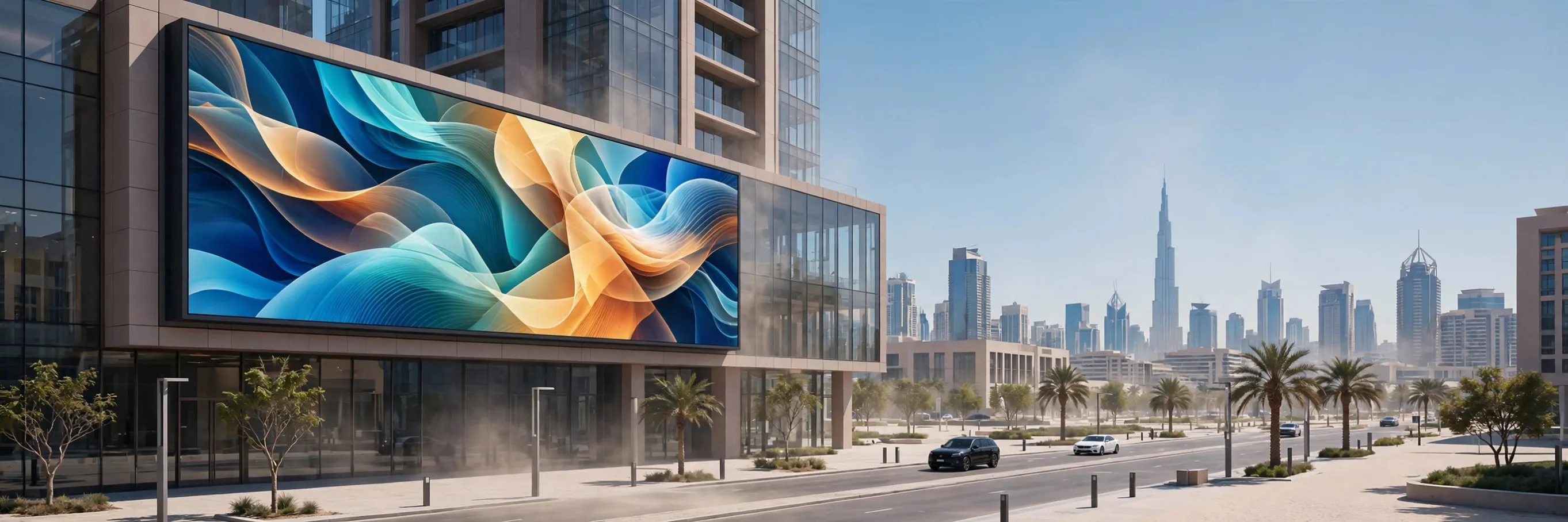
For a mall atrium or a shaded storefront, high transparency with moderate brightness is usually right. For a sun-facing facade in the Gulf, brightness comes first and transparency settles where the picture still holds. Our guide on outdoor LED screens in hot climates covers the same sunlight problem from the outdoor side.
2. Which Side of the Glass, and Indoor or Outdoor Rated?
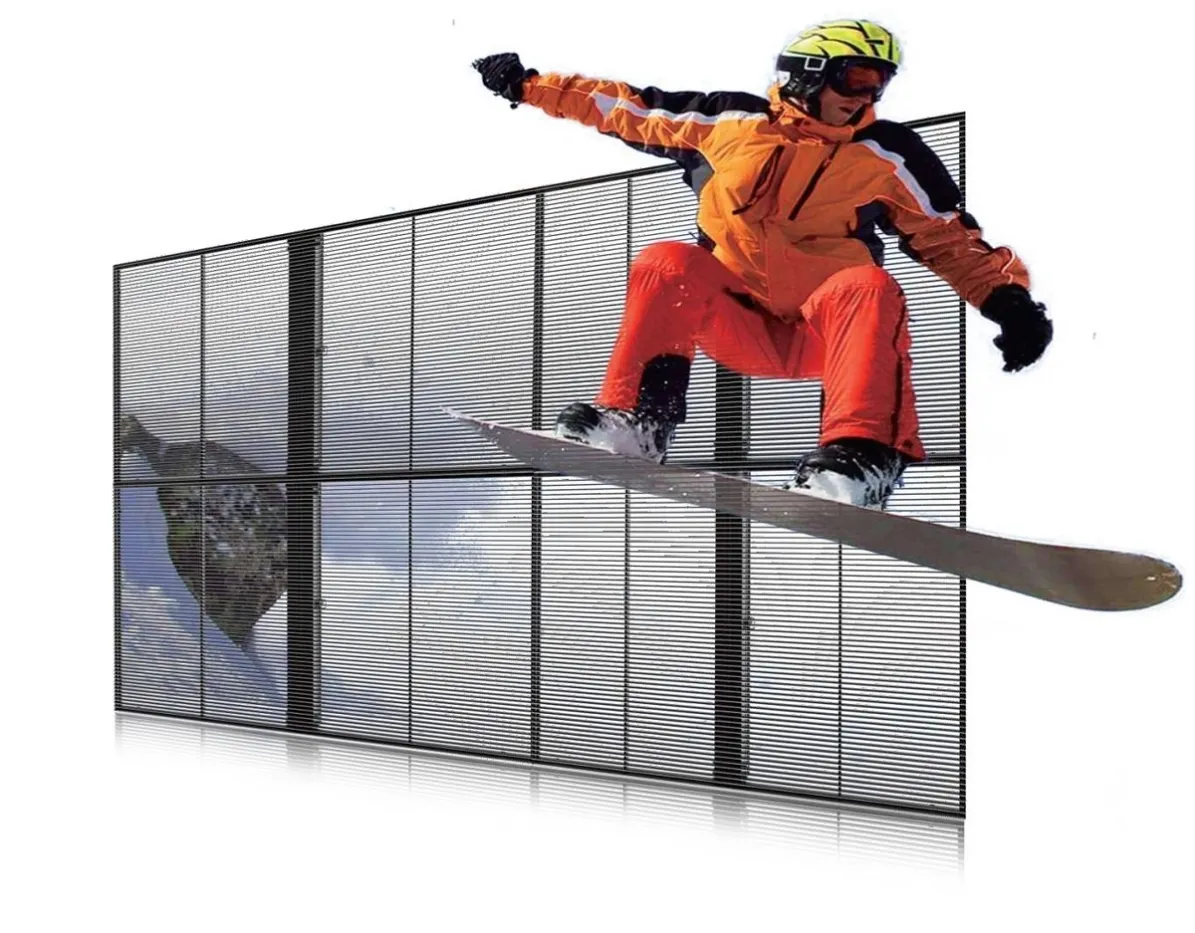
A grille screen can sit behind the glass, in front of it, or on an open facade with no glass at all. Each position needs a different product.
Behind shop glass, an indoor-rated grille is usually enough — the glass itself is the weather shield. On an exposed facade, the screen needs its own sealing: our outdoor grille is glue-sealed to IP65, so dust and rain are kept out of the electronics. Do not put an indoor screen on an exposed wall and hope the building overhang protects it. It will not, the first time wind drives rain sideways.
Ask the supplier which side the screen mounts on, and how it is fixed. A grille wall is light — 6–10 kg/m² — so it hangs on most curtain-wall structures without extra steel, but the mounting design still belongs in the project drawing from day one. Our outdoor grille uses 1000 × 500 mm cabinets, which keeps the grid regular across a large facade.
3. Viewing Distance Decides the Pixel Pitch
Pitch is the distance between LED pixels, and it decides how close a viewer can stand before the picture breaks into dots.
A shop window read from two metres needs a fine pitch and accepts lower transparency. A facade read from across the street can use a coarse pitch, which raises transparency and lowers the cost per square metre at the same time. Buying fine pitch for a facade nobody approaches is money spent on detail nobody can see.
Tell the supplier the nearest viewing distance first — pavement, opposite pavement, or across a plaza — and let the pitch follow from that. Our guide on how to choose the right LED display pixel pitch walks through distance, screen size and budget.
4. Plan Service Access Before You Sign
A facade screen is expected to work for a decade, and something will need attention in that time. The question is how long the shop has to close while it is fixed.
A cabinet grille lets a technician swap one strip from the front in minutes, without taking the wall down. That is the main practical advantage of grille over film or laminated glass, which are far less forgiving once installed. Ask who services the wall, how a failed strip is reached, and whether spare strips are held locally — before the contract, not after the first fault.
Also ask about the refresh rate if the screen will appear on camera, in advertising footage or social media. Our lines refresh at 3840–7680 Hz, which keeps the picture clean on broadcast cameras and phone footage alike.
5. Content Has to Work Through Glass, Not Against It
A facade screen is not a television. Content designed for a dark living room — small text, dark backgrounds, fine detail — disappears on glass in daylight.
Bold shapes, large type and high contrast survive. A short loop that reads in three seconds beats a long film nobody watches to the end. And the screen should be easy to update: if changing the offer takes a technician visit, the window will show last month's promotion all season.
Before you buy, ask how content is loaded and scheduled, and who on your team will do it. A screen that is hard to update becomes a very expensive static sign.
A Quick Checklist Before You Buy
- Which way does the glass face, and how much direct sun hits it at midday?
- What transparency and brightness does that light need — together, not separately?
- Does the screen sit behind glass, or exposed — indoor rated, or IP65 sealed?
- How far away is the nearest viewer — which pitch does that distance need?
- Can one strip be swapped from the front, and who services the wall?
- Will the screen be filmed, and is the content built for daylight?
Answer those six, and the screen almost chooses itself.
Tell us your facade, glass type, viewing distance and sun exposure, and we will configure the transparent screen — indoor or outdoor grille — for your site. Contact us for a quote, or browse the full range of LED display products first. Our indoor transparent grille screen is at https://www.hobledsolution.com/products/1794280630815 and the IP65 outdoor transparent grille screen at https://www.hobledsolution.com/products/traditional-transparent-led-display.