Transparent LED Screen Guide: Grille, Film or Glass — Which Fits Your Project?
Transparent LED comes in three types — grille, crystal film and photoelectric glass. Compare transparency, brightness, weight and installation to choose the right one for your window or facade.
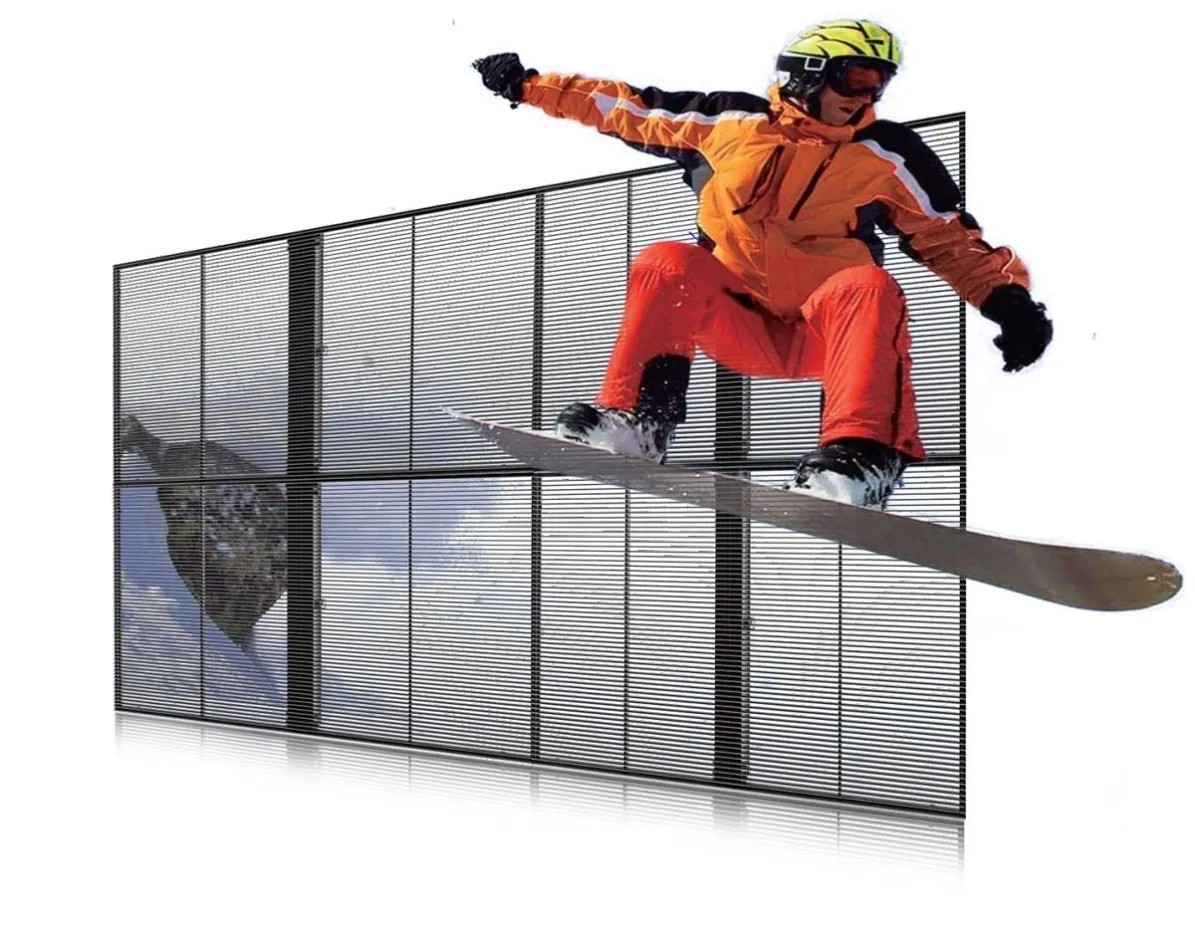
Every glass facade has the same dilemma: you want the daylight and the view, but you also want the glass to work — showing video, offers and brand content to the street. Transparent LED promises both. What most buyers only learn later is that "transparent LED" is not one product. It is a family of three quite different technologies — grille, crystal film and photoelectric glass — and picking the wrong one means the wrong transparency, the wrong brightness, or a screen your building cannot service.
This guide compares the three types with real figures, so you can match the technology to your window or facade before you ask anyone for a quote.
The Three Types at a Glance
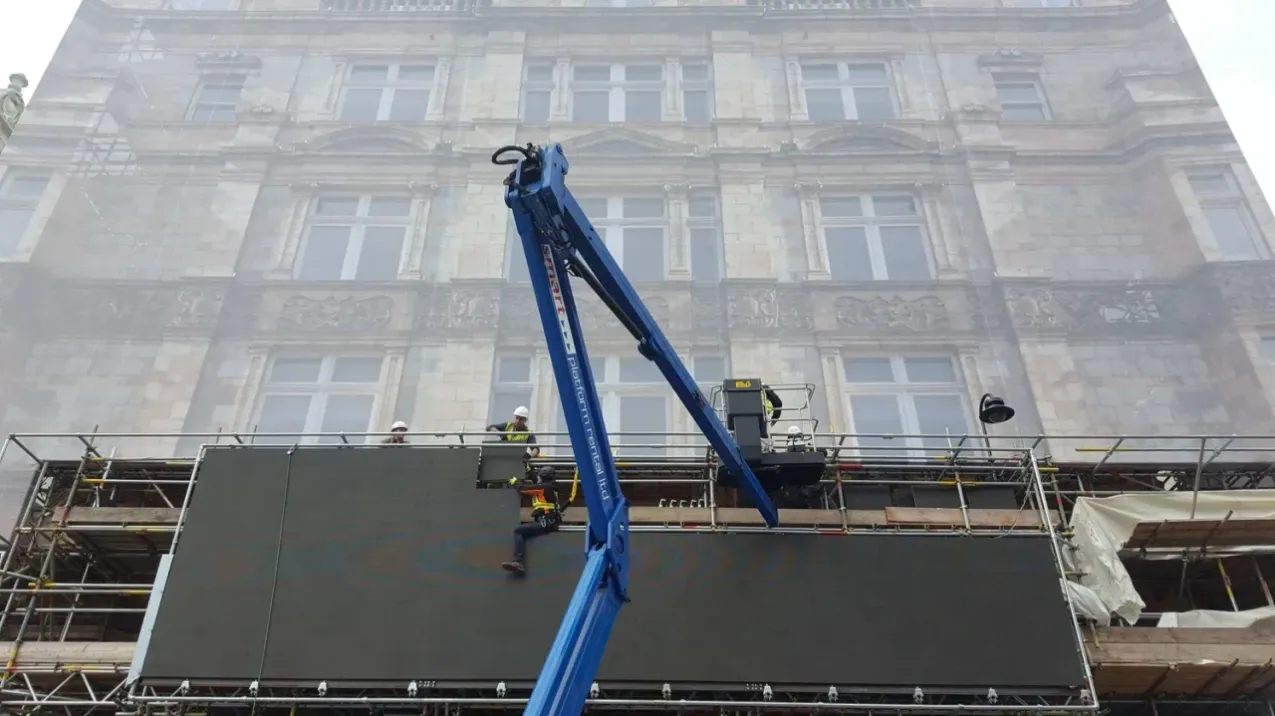
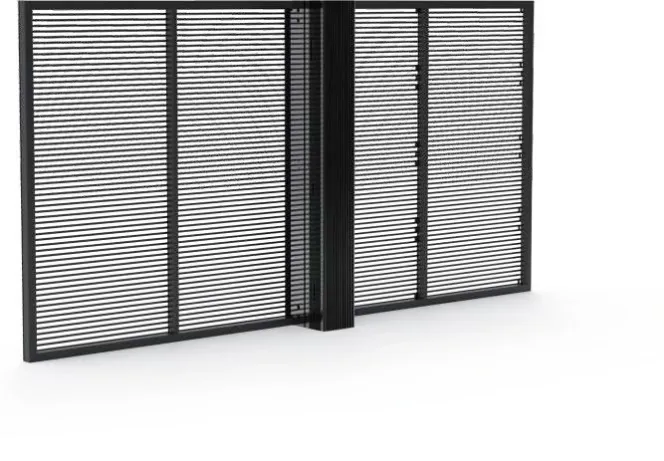
LED grille (strip / mesh screens) — LED strips mounted in slim aluminum cabinets, with open space between the strips. Transparency runs from about 30% to 85% depending on the model and pitch, and because the LEDs sit in the open air, brightness can go high: 800–8,000 nits indoors and up to 5,500 nits in IP65-sealed outdoor versions. At only 6–10 kg/m², a grille wall hangs on most curtain-wall structures, and each strip can be replaced individually when service is needed. This is the type to choose for large glass facades, atriums and building media walls.
Crystal film (adhesive LED film) — a thin, flexible LED film that sticks directly onto existing glass, like a high-tech window decal. It gives the cleanest look of the three because there is no cabinet and no frame, which makes it ideal for retrofitting shop windows, office partitions and exhibition glass that is already installed. The trade-offs are indoor brightness levels and a more delicate installation: the film goes on once, and repositioning is not really an option.
Photoelectric glass (LED glass) — the LEDs are laminated inside architectural glass panels, so the glazing itself becomes the display. It is the most "invisible" solution when the screen is off and suits new-build projects where the glass is being specified anyway. It is also the most project-specific: sizes, transparency and electronics are engineered per building, with longer lead times to match.
Choose by Glass, Sun and Viewing Distance
New facade or existing glass? If the glass already exists, crystal film or a cabinet grille mounted behind it are your realistic options. If you are specifying a new building, all three are on the table — including LED glass.
How much sun hits the glass? A north-facing office window and a sun-blasted mall facade are different worlds. Brightness is what decides whether your content survives daylight: indoor types work in the hundreds-to-low-thousands of nits, while a sun-facing outdoor wall needs a sealed grille rated in the thousands. Choosing a delicate indoor film for a sunny facade is the most common — and most expensive — mistake in this category.
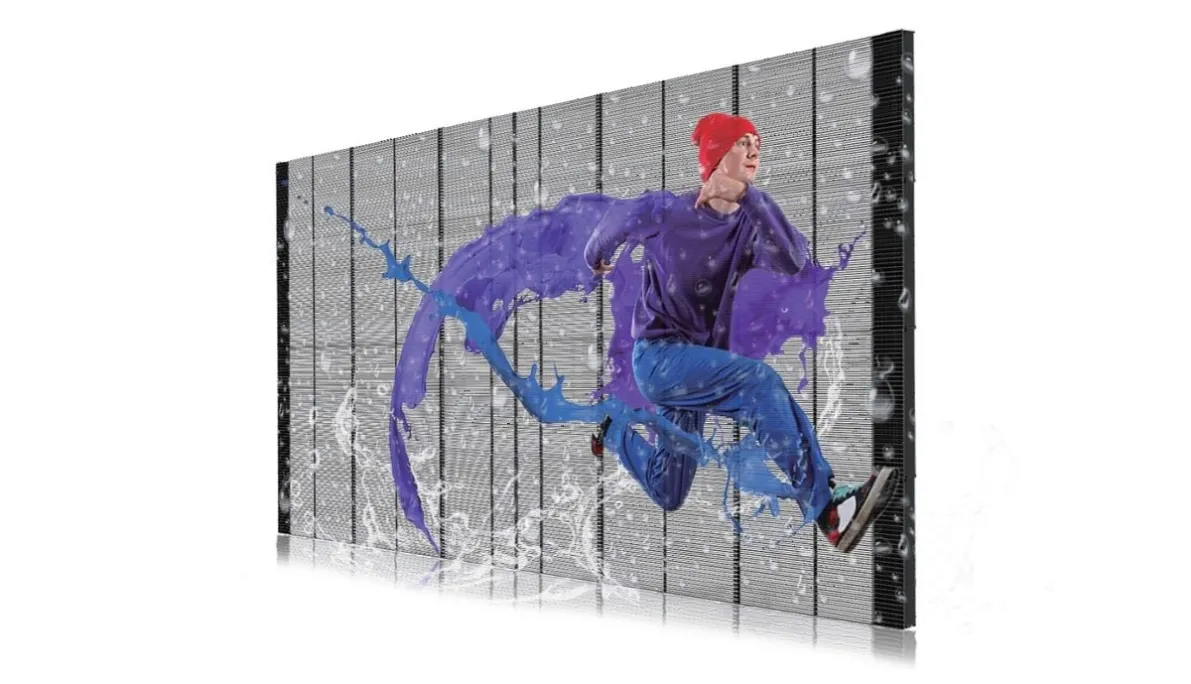
How far are the viewers? Pitch still rules everything. A shop window read from two metres needs a fine pitch and accepts lower transparency; a facade read from across the street can use a coarse pitch, which raises transparency and lowers cost per square metre at the same time.
Three Mistakes We See Buyers Make
Chasing maximum transparency. An 85%-transparent screen shows less image area — in bright sun the picture can look washed out. Transparency and brightness must be chosen together, for your light conditions, not from a spec sheet's biggest number.
Forgetting service access. Screens need maintenance for a decade. A cabinet grille lets a technician swap one strip from the front in minutes. Film and laminated glass are far less forgiving — plan who services the wall, and how, before you sign.
Ignoring weight and structure. Even "light" screens add load, wind area and power runs. At 6–10 kg/m² a grille is usually easy on curtain walls, but the mounting design still belongs in the project drawing from day one.
Which One Fits Your Project?
If you remember one line: grille for scale and sunlight, film for retrofit elegance, glass for new-build architecture. Most commercial windows and facades we supply end up with a grille — it is the only type that covers indoor and outdoor, fine and coarse pitches, and stays serviceable at large sizes. You can see our indoor transparent grille screen and the IP65 outdoor transparent grille screen for the full specifications, and our crystal film LED display if your glass is already in place.
Send us a photo of your glass and its rough size, and we will tell you honestly which type fits — and which pitch — before any quotation. Contact us for a quote, or browse the full range of LED display products first.