How to Choose a Rental LED Display for Concerts, Exhibitions and Year-End Events
Choosing a rental LED display for a concert, exhibition or year-end event? Compare indoor and outdoor rental screens by venue, viewing distance, setup speed and camera performance before you book.
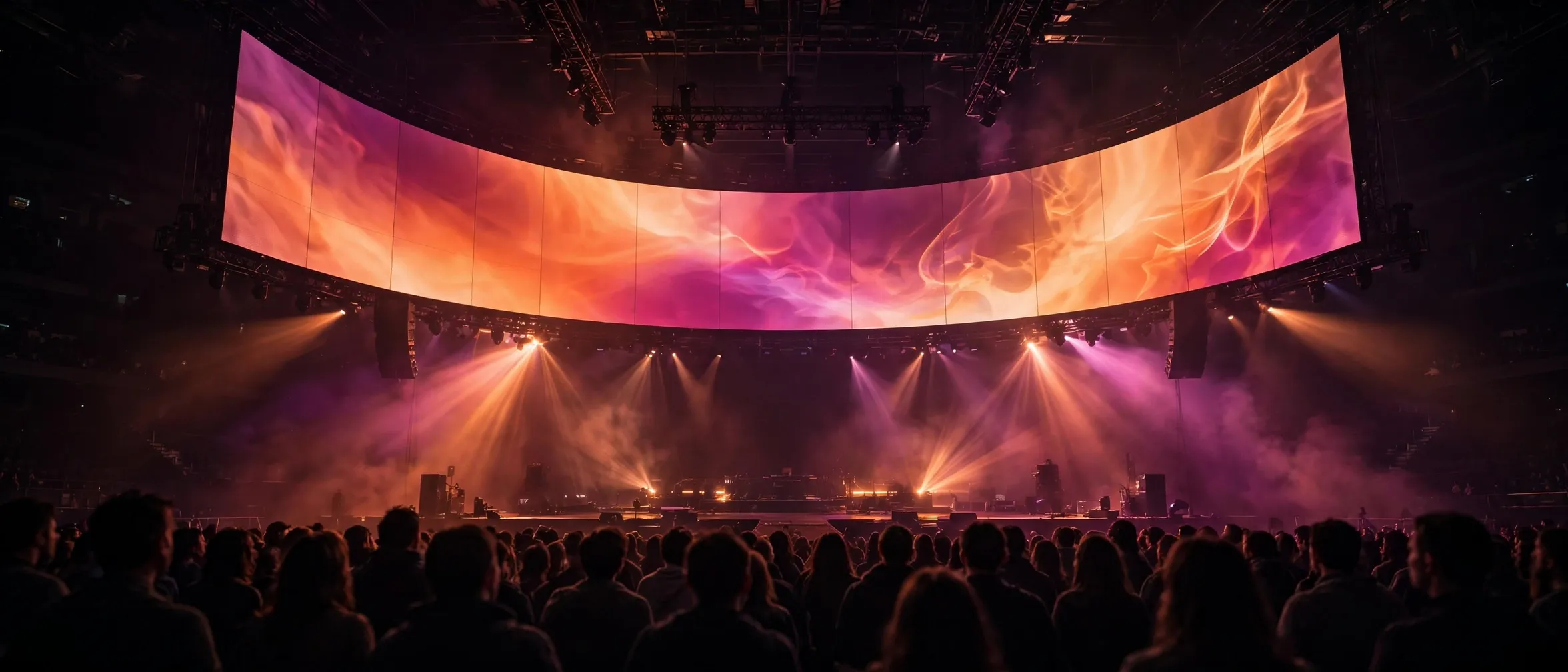
November and December are the busiest weeks of the year for live events. Concerts, trade shows, product launches, award nights and company year-end parties all land in the same few weeks — and almost all of them need a big screen, fast. A rental LED display is the usual answer: it goes up in hours, comes down the same night, and moves to the next venue.
But "rental LED" covers a wide range of hardware, and the wrong choice shows up immediately — a wall that washes out under stage lights, a picture that flickers on the livestream, or a setup that eats half the rehearsal time. Here is how to choose the right one, in the order that matters on site.
1. Indoor or Outdoor? Start With the Venue
This is the first decision, because it fixes the two numbers that decide whether the picture survives the show: brightness and weather protection.
Indoor events — concert halls, exhibition centres, hotel ballrooms — need far less brightness. Our indoor rental line runs at 600–800 nits, which is plenty once the roof is over the screen, and its cabinets are rated IP43. That is enough for a dry indoor venue, and it keeps the cabinets light: 6.8 kg for a 500 × 500 mm cabinet, 12.8 kg for a 500 × 1000 mm one.
Outdoor events — festivals, open-air stages, fan zones — are a different job. Direct sunlight demands far more brightness, and rain cannot be a show-stopper. Our outdoor rental cabinets are sealed IP65 front and rear and rated at 4,500 nits or higher, so the picture stays readable in daylight and a shower during the set does not end the show.
If your event straddles both — a stage with an open side, a tent that leaks light — choose the outdoor specification. The cost of over-specifying brightness is small; the cost of a washed-out main screen is the whole show.
See the two lines side by side: our indoor rental LED display (P1.56–P4.81, IP43) and our outdoor rental LED display (P2.6–P4.81, IP65, 4,500+ nits).
2. Pixel Pitch Follows Viewing Distance
Pitch is the distance between LED pixels, and it decides how close the audience can stand before the picture breaks into dots. The rule is simple: the closer the nearest viewer, the finer the pitch.
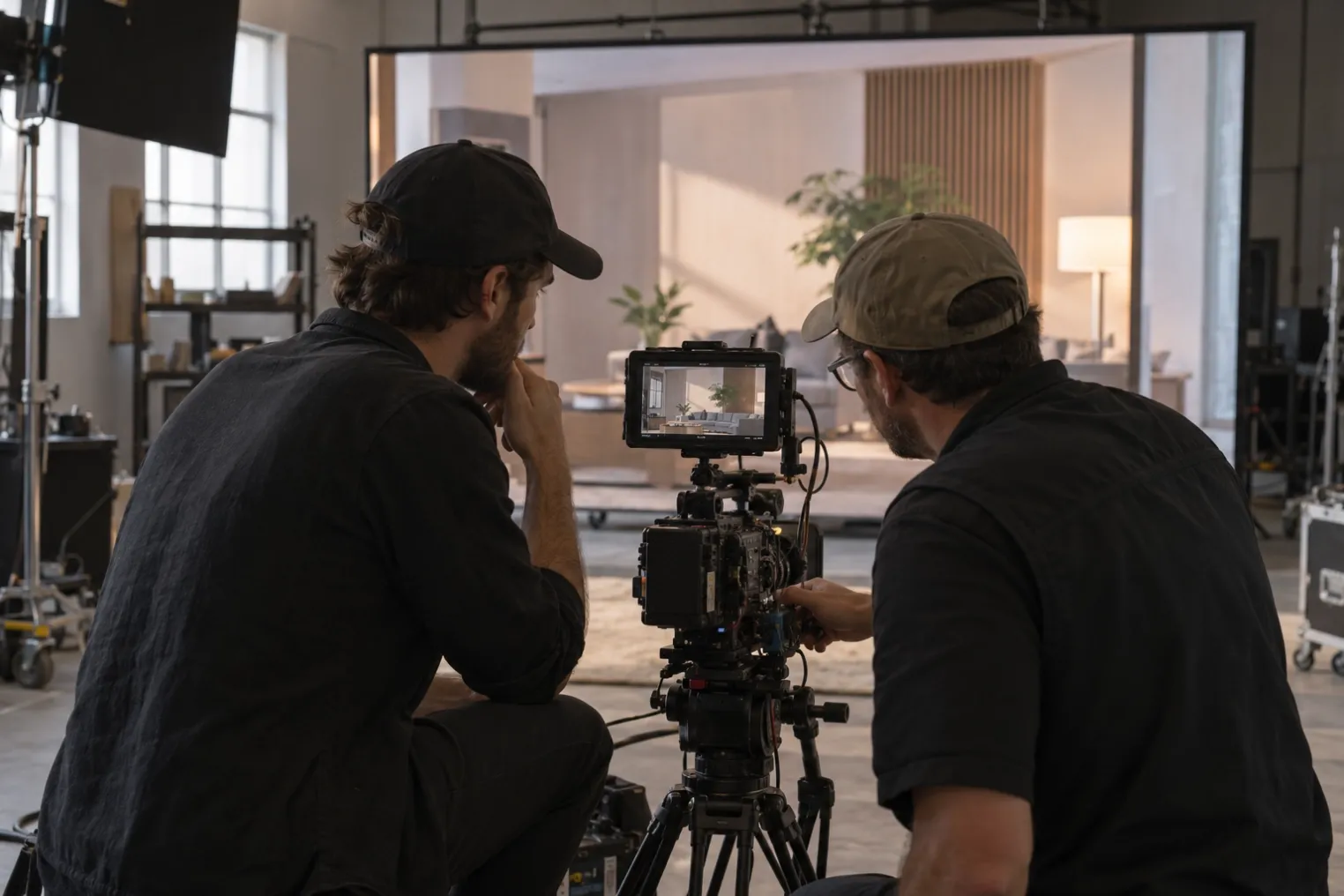
For most rental jobs, P2.6–P3.91 covers the middle ground — a stage wall seen from a few metres, an exhibition booth, a conference backdrop. Finer pitches (P1.56–P2.5) suit front-row and camera-close work, such as a studio set or a product launch where the camera sits metres from the wall. Coarser pitches (P4.81) suit large outdoor stages where the nearest viewer is far away, and they also lower the cost per square metre.
Do not buy pitch you cannot see. If the front row is ten metres back, a fine pitch adds cost without adding visible quality. If you are unsure how pitch maps to your room, our guide on how to choose the right LED display pixel pitch walks through viewing distance, screen size and budget.
3. Setup Speed Is a Real Cost
Rental screens are built, used and struck on a clock. A wall that takes an extra hour to build is an hour taken from rehearsal, soundcheck or doors — and on a touring schedule, an hour of crew time every night.
Three things decide build speed:
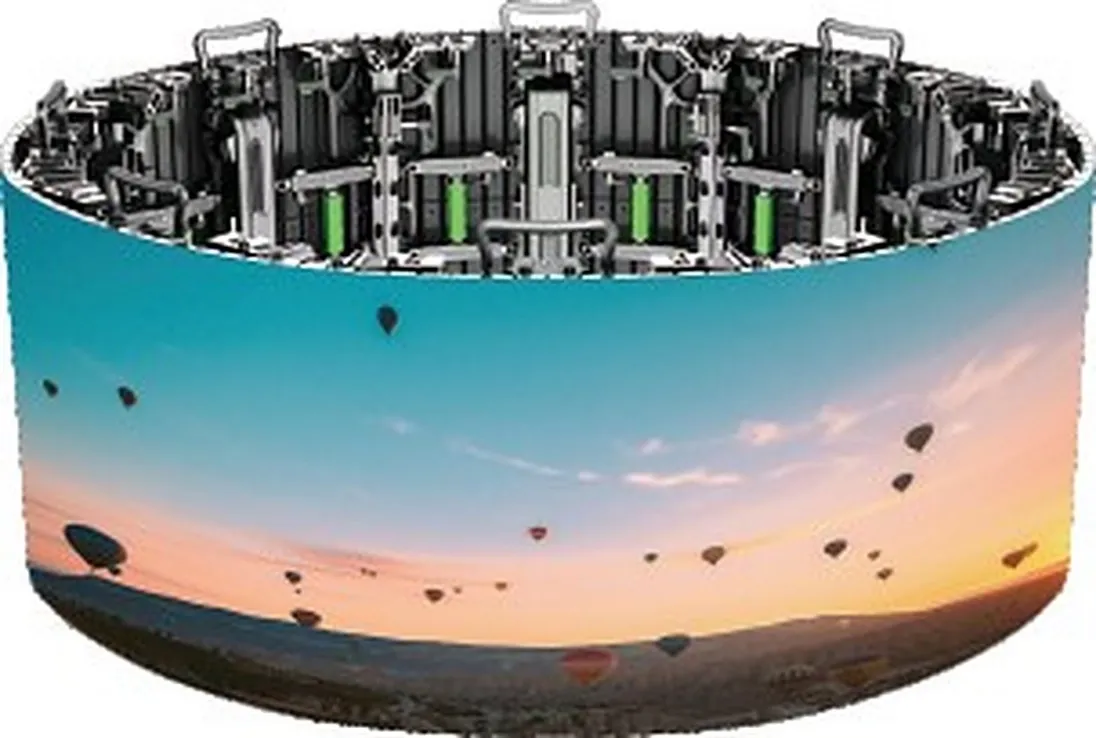
Fast locks. Both our indoor and outdoor rental cabinets use quick locks that join cabinets in seconds, and straight, curved and 45° bevel cabinets mix in one wall. That means one fleet can build a flat backdrop on Friday and a curved stage surround on Saturday.
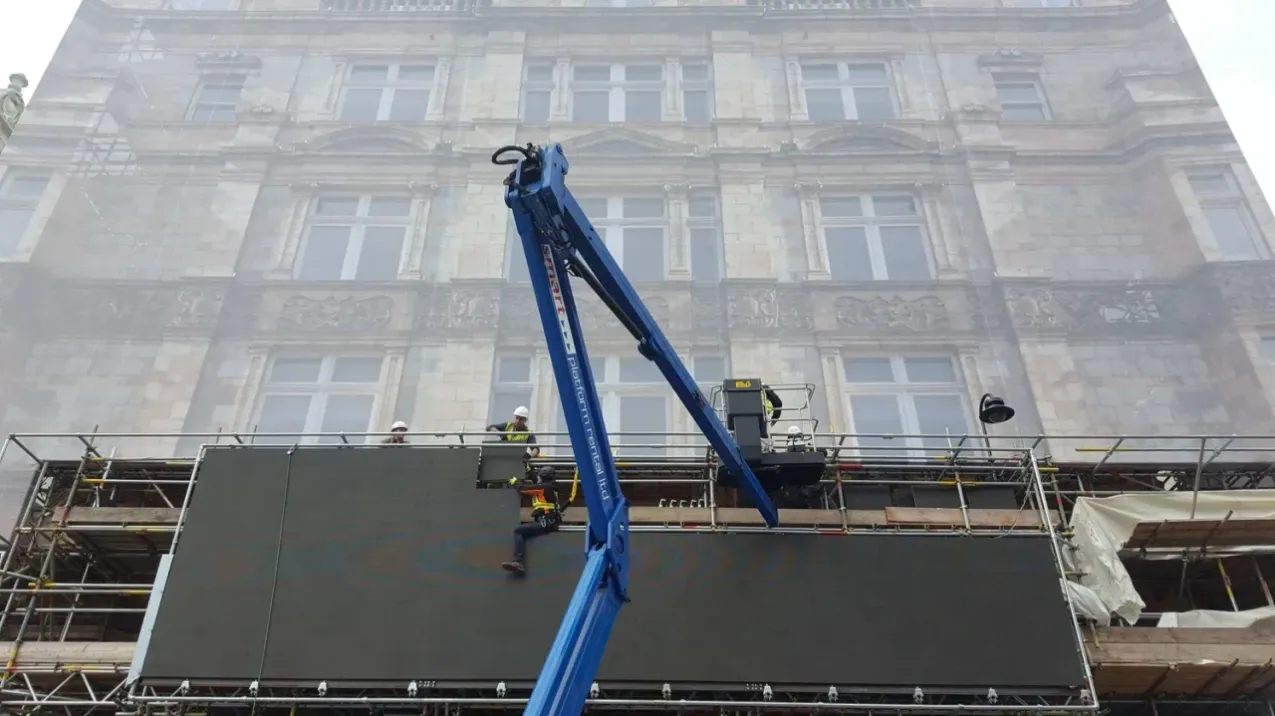
Weight and handling. At 6.8 kg per 500 × 500 mm cabinet, two crew members can carry and hang a wall without a forklift for every lift. Die-cast aluminium cabinets stay rigid while staying light, which matters when the same cabinets are loaded in and out of trucks every week.
Hanging or stacking. Check how the wall mounts before the truck arrives. Our rental cabinets support both hanging from truss and ground stacking, so the same stock works in a venue with rigging points and one without.
4. Make Sure It Looks Right on Camera
Almost every event is filmed now — a livestream, a sponsor recap, or a hundred phones in the crowd. A wall that looks perfect to the eye can show banding or flicker on camera if its refresh rate is too low for the shutter speeds being used.
Our rental lines refresh at 3840–7680 Hz, which keeps the picture clean on broadcast cameras and phone footage alike. But a refresh-rate figure alone is not a guarantee: the camera settings, the processor and the signal path all play a part. If your show is being filmed, ask for a camera test before the event, with the actual cameras and frame rates you will use. Our article on LED wall flickering on camera explains what information to collect before that test — it is a short checklist that saves a long argument on show day.
5. Spares, Service and the Backup Plan
A rental screen is only as reliable as its weakest module. Before you book, ask three questions:
- Can a module be swapped on site? Both our rental lines offer front and rear service, so a faulty module can be changed between sets without taking the wall down.
- Are spares on the truck? A few spare cabinets and modules, plus spare power and data cables, turn a failure into a five-minute fix.
- Does the fleet share parts? Our indoor and outdoor rental cabinets share locks, cables and control, so one rental fleet can cover both kinds of show — and one spares kit covers both.
A Quick Checklist Before You Book
- Indoor or outdoor — and how much daylight and weather will the screen face?
- Nearest viewing distance — which pitch does it actually need?
- Hanging or ground-stacked — does the venue have rigging points?
- Will it be filmed — has a camera test been planned?
- Spares on site — modules, cabinets, cables, and someone who can swap them?
Answer those five, and the screen almost chooses itself.
Tell us your stage size, viewing distance and event dates, and we will configure the wall — indoor or outdoor — and a backup plan for your show. Contact us for a quote, or browse the full range of LED display products first.