LED Display Insights
LED Video Wall Installation Planning: 7 Key Checks
Planning an LED video wall installation? Review 7 key points covering cabinet dimensions, maintenance access, mounting structures, power, control systems, and commissioning.
LED Video Wall Installation Planning: 7 Things to Confirm Before Ordering
An LED video wall is more than a screen. A successful installation depends on the display, mounting structure, power supply, signal distribution, maintenance access, and site conditions working together.
For AV integrators, contractors, and project managers, confirming these details before ordering can help prevent installation delays, unexpected costs, and unnecessary modifications on site.
Here are seven important points to review before placing an LED display order.
1. Confirm the Final Screen Dimensions and Resolution
Start by confirming the available installation space and the required screen dimensions.
The LED cabinet size, pixel pitch, and cabinet arrangement determine the final display dimensions and resolution. Standard cabinet combinations may not always match the exact dimensions specified in an architectural drawing.
Before production, confirm:
- Final screen width and height
- Cabinet or module dimensions
- Total pixel resolution
- Screen aspect ratio
- Required content resolution
For example, a 3.84 m × 2.16 m LED video wall may be suitable for 16:9 content, but the actual resolution depends on the selected pixel pitch.
It is important to confirm both the physical dimensions and the pixel resolution before finalizing the configuration.
2. Decide on Front or Rear Maintenance
Maintenance access is often overlooked during the early design stage.
If the display is installed against a wall or inside a narrow structure, rear maintenance may be difficult or impossible without additional space.
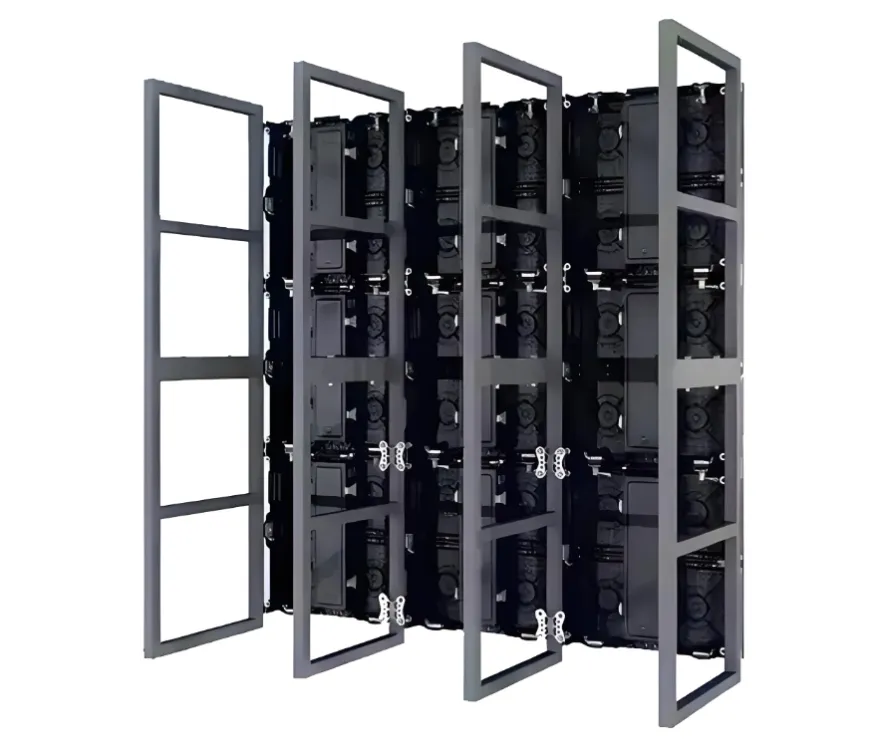
Front maintenance can be useful for wall-mounted displays, retail installations, and control rooms where rear access is limited. Rear maintenance may be appropriate when technicians can safely access the back of the display.
Before ordering, confirm:
- Available space behind the screen
- Access for module and power supply replacement
- Maintenance method supported by the cabinet
- Required tools and service clearance
The maintenance method should be agreed upon before production so the cabinet configuration and installation structure can be designed accordingly.
3. Check the Mounting Structure and Load Requirements
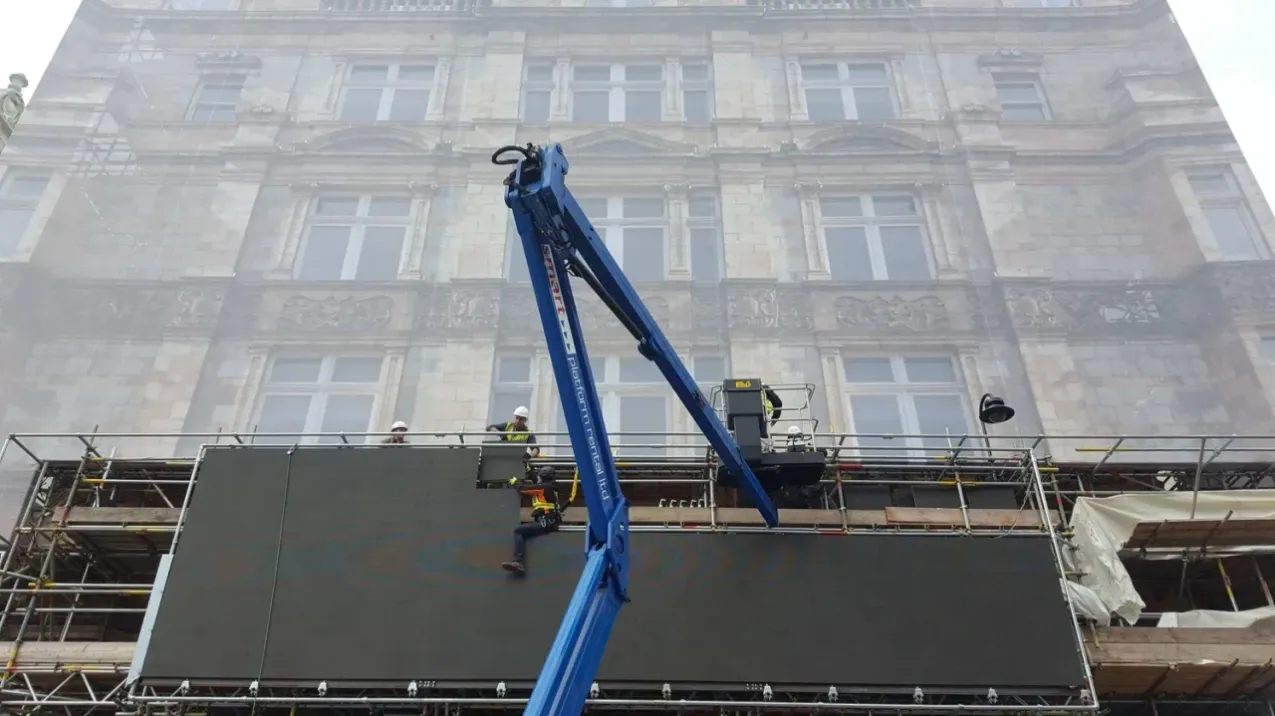
An LED display requires a suitable mounting structure that can safely support the complete system.
Depending on the project, this may include steel structures, wall brackets, hanging bars, floor supports, or custom frames.
The design should account for the total display weight, cabinet arrangement, installation method, and site-specific structural requirements.
For outdoor installations, wind loads and local building regulations may also need to be considered.
The LED supplier, structural engineer, and installation contractor should coordinate their responsibilities before manufacturing begins.
Do not assume that a structure designed for one cabinet configuration will automatically suit another.
4. Calculate Power Requirements Before Installation
Power planning is essential for both fixed installations and rental LED displays.
The electrical requirements depend on screen size, LED configuration, operating brightness, content, and power supply specifications.
Before installation, confirm:
- Maximum and typical power consumption
- Required voltage and electrical circuits
- Power distribution arrangement
- Cable routing and connector locations
- Grounding and applicable electrical safety requirements
Maximum power consumption and typical operating consumption are different figures. Both can be useful when planning electrical infrastructure and estimating operating costs.
The final electrical design should be reviewed by a qualified professional in accordance with local regulations.
5. Plan the Signal and Control System
The control system must support the display's total pixel resolution and the intended content source.
A system that works for a small screen may not be suitable for a larger video wall or a multi-screen installation.
Before ordering, confirm:
- Total screen resolution
- Video processor or sending device model
- HDMI, DisplayPort, or other required signal inputs
- Network and signal cable routing
- Content playback and screen management requirements
- Compatibility with the selected receiving cards and control system
For projects using NovaStar systems, the specific controller and sending device should be selected according to the total resolution, input requirements, and system architecture.
For multiple displays, confirm whether the project requires independent content on each screen, synchronized playback, or one extended image across the entire installation.
These requirements can affect the control configuration and cabling plan.
6. Consider the Installation Environment
Indoor and outdoor LED displays face different environmental conditions.
Indoor installations may require careful consideration of viewing distance, ambient lighting, ventilation, and operating hours.
Outdoor installations require additional attention to weather exposure, brightness, cabinet protection, drainage where applicable, and temperature conditions.
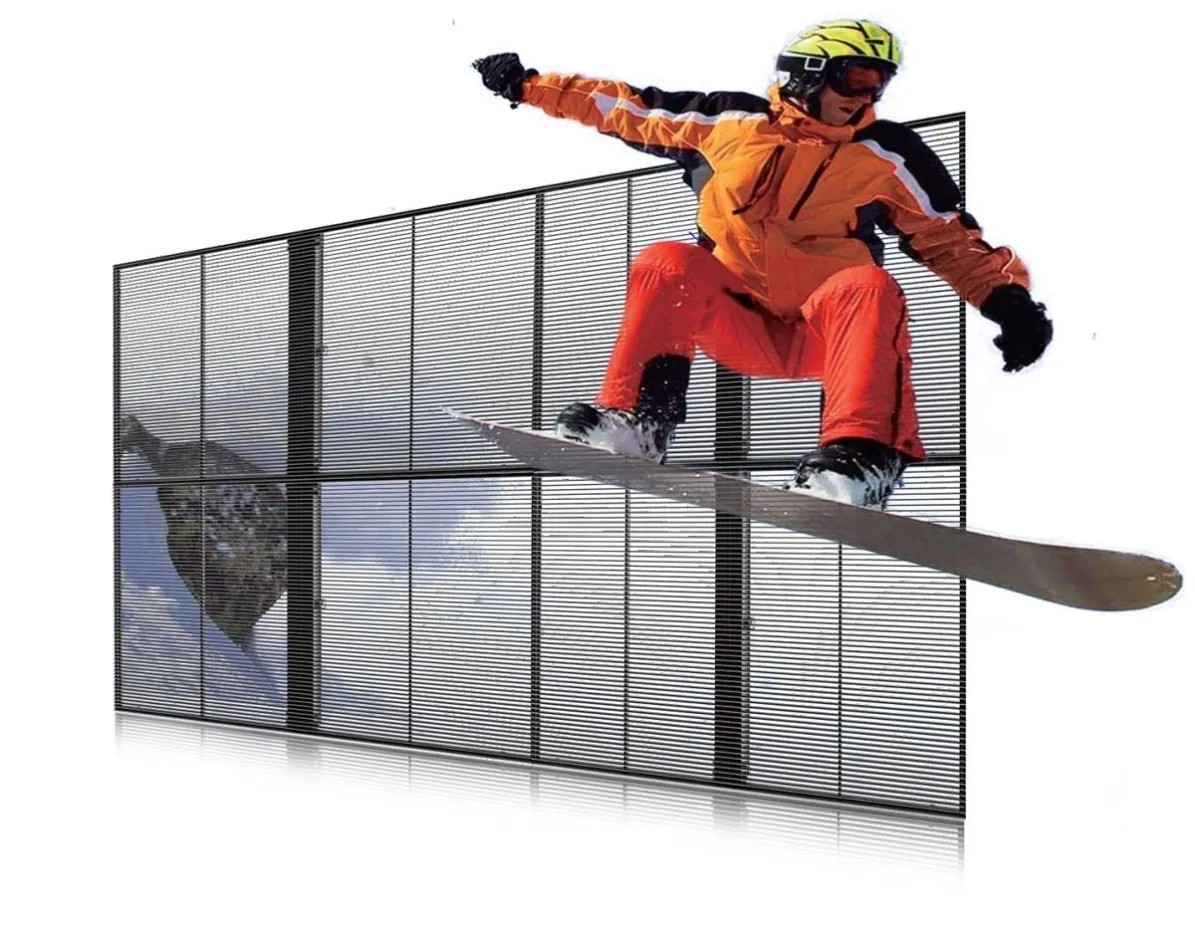
Transparent LED and Crystal Film LED installations may also involve glass dimensions, attachment methods, visibility requirements, and restrictions on the building facade.
Before selecting a display, the project team should assess the actual installation environment rather than relying on product specifications alone.
7. Prepare Spare Parts and Commissioning Plans
A project is not complete simply because the display has arrived at the site.
The installation team should have a clear plan for assembly, configuration, testing, and handover.
Before shipment, discuss:
- Recommended spare modules and critical components
- Installation drawings and cabinet layout
- Receiving-card configuration and mapping files
- Testing procedures and acceptance criteria
- Warranty terms and technical support arrangements
For larger projects, arranging spare parts and confirming technical responsibilities in advance can help reduce downtime if a component needs replacement.
The exact spare-parts quantity should depend on the screen size, application, operating conditions, and the buyer's maintenance strategy.
LED Display Pre-Order Checklist
Before approving your LED display order, make sure the project team has confirmed the following:
- Final screen dimensions and resolution
- Cabinet size and arrangement
- Front or rear maintenance
- Mounting structure and installation method
- Electrical and power distribution requirements
- Control system and signal connections
- Environmental conditions
- Spare parts and commissioning responsibilities
Confirming these details early helps align the product configuration with the actual site requirements.
How WINTECH LED SOLUTION Supports Project Planning
WINTECH LED SOLUTION works with project contractors, AV integrators, distributors, and commercial display buyers on indoor and outdoor fixed LED displays, rental screens, fine-pitch displays, and transparent Crystal Film LED solutions.
With more than 15 years of industry experience, our production resources include two LED module factories and an LED display assembly and testing facility in Shenzhen, China.
We believe technical communication should begin before production. Understanding the installation space, viewing distance, maintenance access, control system, and operating environment helps us recommend a configuration that better fits the project.
Whether you are planning a commercial video wall, a rental display, a control room screen, or a transparent LED installation, early coordination can make the process clearer for everyone involved.
Planning an LED video wall project?
Share your screen dimensions, application, installation drawings, and control-system requirements with WINTECH LED SOLUTION. Our team can help review the display configuration and identify important technical details before you place your order.
Frequently Asked Questions
What information is needed to order an LED video wall?
The main requirements include screen dimensions, pixel pitch or target resolution, indoor or outdoor application, installation method, maintenance access, control-system preference, and power requirements. Installation drawings are also helpful for customized projects.
Should I choose front or rear maintenance for an LED display?
Front maintenance is often suitable when the display is installed close to a wall or in a space with limited rear access. Rear maintenance can be practical when technicians have sufficient access behind the screen. The decision should be based on the actual site layout and the cabinet design.
How do I choose a controller for an LED video wall?
The controller should support the total screen resolution, required input signals, content workflow, and number of displays. The correct model depends on the complete system configuration, not just the physical screen dimensions.
Why should power requirements be confirmed before ordering?
The installation site may need dedicated circuits, suitable cable sizes, power distribution equipment, and appropriate electrical protection. Confirming requirements early helps prevent costly changes during installation.
What should be included in an LED display commissioning plan?
A commissioning plan typically covers cabinet alignment, signal and power checks, screen mapping, brightness and color settings, content playback, functional testing, and handover documentation. Project-specific acceptance criteria should be agreed upon in advance.
LED display installation requirements, LED video wall planning, LED cabinet maintenance, LED display power requirements, LED video wall control system, LED display commissioning