LED Display Insights
Curved LED Display: Design, Installation & Key Engineering Considerations
Curved LED displays are used in retail, exhibition, corporate and architectural settings. This guide covers structural design, cabinet alignment, installation accuracy and maintenance access.
Curved LED Display: What Matters Beyond the Curve?
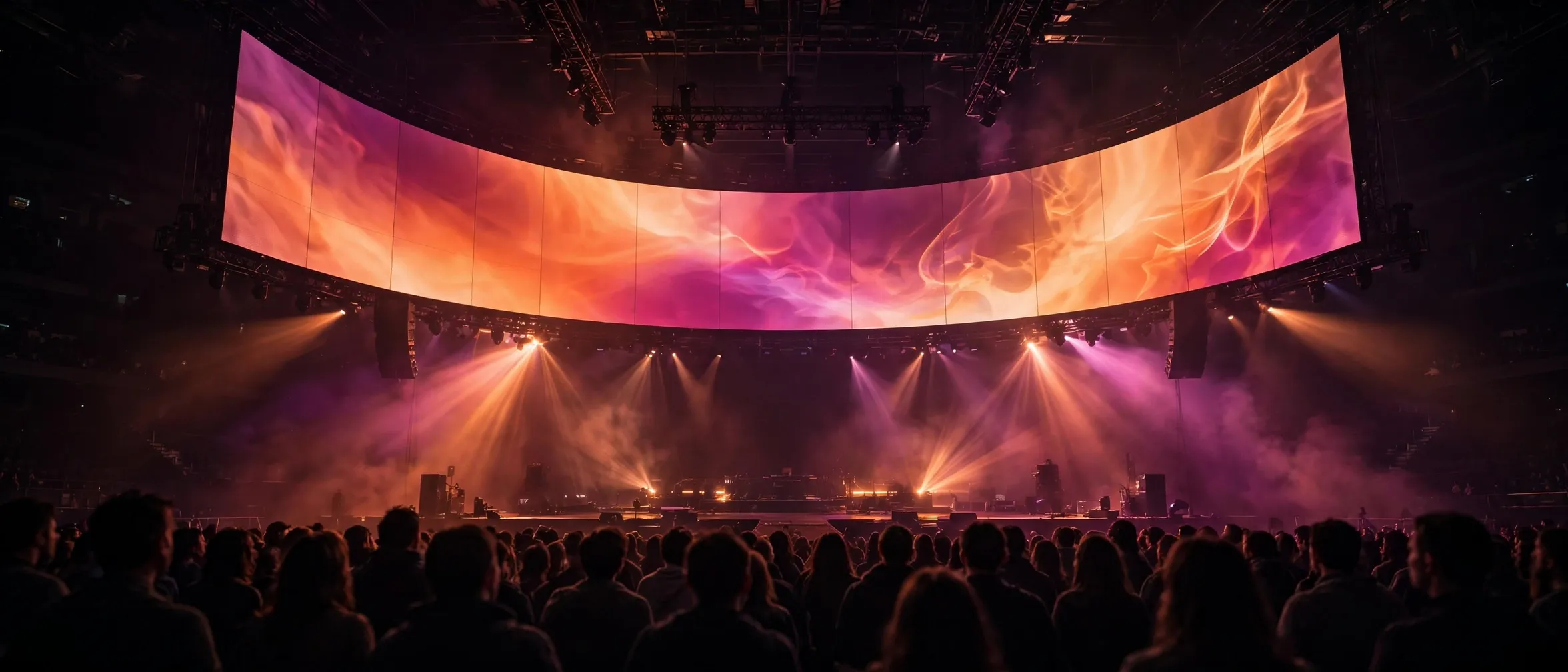
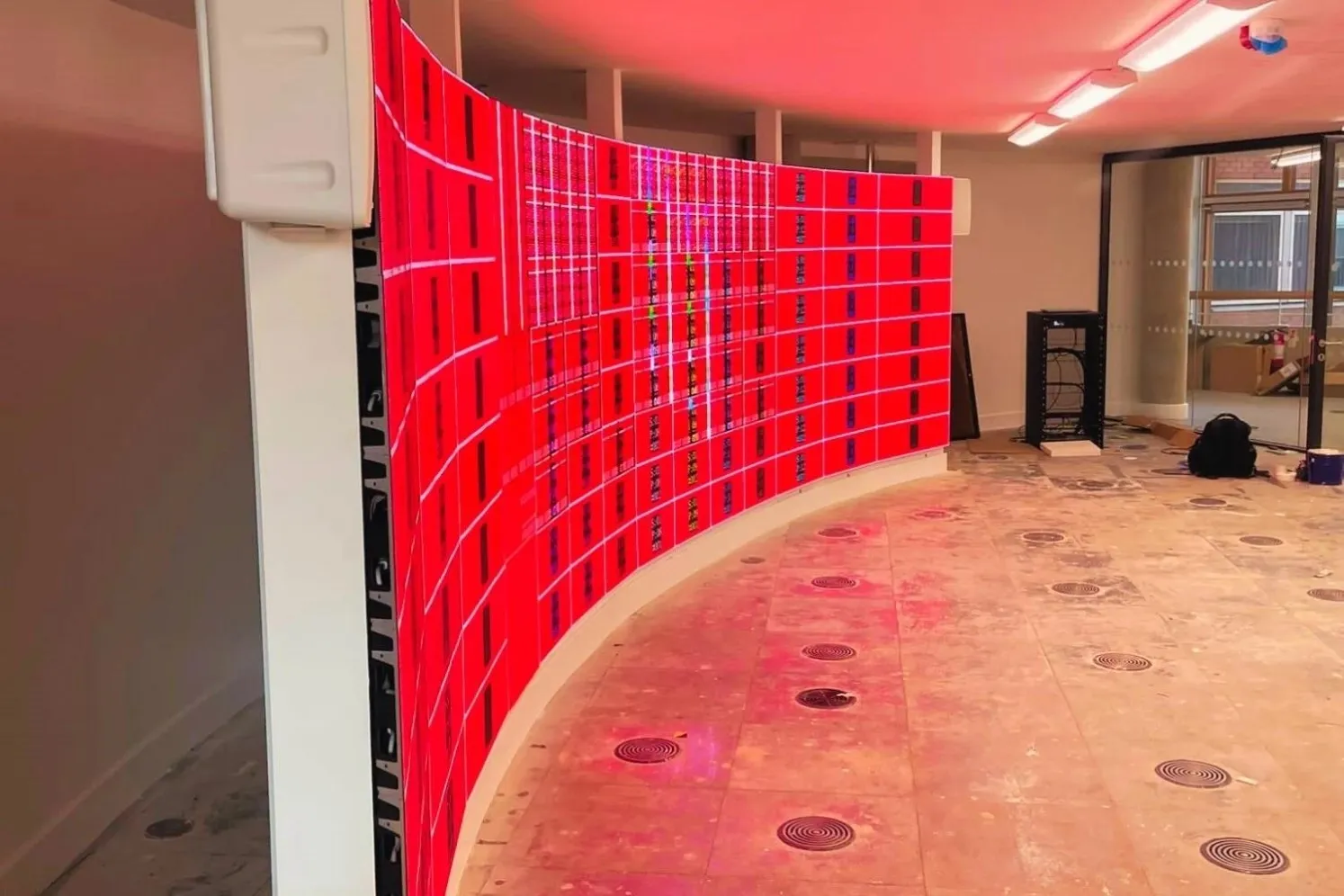
Curved LED displays are increasingly used in retail spaces, exhibition halls, corporate environments, and architectural installations.
A curved screen can create a more immersive visual experience than a conventional flat LED wall. However, achieving a smooth curve is only one part of the project.
The real challenge lies in the engineering behind it: structural design, cabinet alignment, installation accuracy, maintenance access, and content presentation.
For system integrators and project contractors, these details often determine whether a curved LED display performs reliably over time.
1. Not Every Curved LED Display Uses the Same Structure
There are several ways to build a curved LED screen, depending on the required radius, installation environment, and display size.
Curved rental LED cabinets
Rental LED cabinets with adjustable angle locks can create concave or convex screen configurations. They are commonly used for exhibitions, stage productions, and temporary installations.
Flexible LED modules
Flexible LED modules can be mounted on specially designed structures to create tighter curves, cylindrical displays, and other custom shapes.
For permanent installations, specially engineered cabinets and supporting structures may be required to achieve the desired curvature and appearance.
The appropriate solution depends on the project geometry, viewing distance, maintenance requirements, and budget.
2. Cabinet Alignment Is More Important Than It Looks
One of the most common challenges in curved LED installations is maintaining consistent alignment between adjacent cabinets or modules.
Even small installation deviations can become visible when the screen displays continuous lines, architectural graphics, or moving content.
Key considerations include:
- Consistent cabinet angles and connection points
- Accurate supporting structure dimensions
- Uniform module spacing and surface alignment
- Appropriate mechanical tolerances
- Secure and accessible mounting connections
A smooth-looking curve depends on the accuracy of the entire installation, not simply the flexibility of the LED modules.
3. The Supporting Structure Should Be Designed Early
For custom curved LED projects, the supporting structure should not be treated as an afterthought.
The structure must accommodate the required radius while providing sufficient stability and appropriate mounting positions.
Before production, the project team should confirm the overall screen dimensions, curvature radius, installation method, load-bearing conditions, and available maintenance space.
For permanent installations, structural design should also account for site-specific safety requirements.
Early coordination between the LED supplier, structural contractor, and installation team can help avoid costly modifications on site.
4. Maintenance Access Can Affect the Entire Design
A curved LED display may look impressive when installed, but maintenance becomes difficult if access has not been considered.
For example, a screen installed directly against a curved architectural wall may have limited rear access.
In such cases, front-service LED modules and accessible power supplies or receiving cards may be important.
The maintenance approach should be confirmed before finalizing the cabinet and supporting structure design.
A practical curved LED solution should be designed not only for installation, but also for long-term service.
5. Content and Viewing Position Matter
Curved LED displays are often selected for their visual impact, but screen geometry can also affect the viewing experience.
A concave display may work well for immersive presentations, while a convex display can provide visibility across a wider range of positions.
However, content designed for a flat screen may not always appear as intended on a curved surface.
Depending on the installation, the project may require adjustments to content layout, image mapping, or viewing angles.
This is particularly important for branded environments, exhibitions, and architectural LED applications.
6. Factory Testing Before Shipment
For customized curved LED projects, factory assembly and testing can help identify potential problems before delivery.
Useful checks include:
- Cabinet and module alignment
- Curvature consistency
- Mechanical connections
- Display uniformity and calibration
- Signal and power connections
- Module replacement and maintenance access
Where practical, assembling representative sections—or the complete display—before shipment can reduce installation uncertainty.
Choosing the Right Curved LED Solution
There is no single curved LED design suitable for every project.
A temporary exhibition display, a cylindrical retail installation, and a permanent architectural LED wall may require different cabinet structures, mounting systems, and maintenance approaches.
At WINTECH LED SOLUTION, we support LED display projects with module manufacturing, display assembly, testing, and customized configuration options.
Our focus is to help integrators and project partners evaluate practical solutions based on installation conditions and project requirements.
Planning a curved LED display project?
Share your screen dimensions, desired curvature, installation environment, and viewing distance. We can help evaluate suitable LED module and cabinet configurations before the project moves forward.