Jul 2, 2026LED Display Insights
COB vs SMD LED Display | Which LED Technology Is Better for Indoor Applications?
COB vs SMD LED display comparison guide. Learn differences in image quality, durability, cost, and applications to choose the right LED solution for your project.
🧠 Introduction
When selecting an LED display for indoor or high-end applications, one of the most common questions is:
👉 Should I choose COB or SMD LED technology?
Both technologies are widely used in the LED display industry, but they differ significantly in structure, performance, and application suitability.
Understanding these differences is critical for making a cost-effective and long-term reliable decision.
🟦 1. What is SMD LED Display?
SMD (Surface Mounted Device) LED is the traditional and most widely used LED packaging technology.
Each pixel is composed of separate red, green, and blue LED chips mounted on the surface of the PCB.
✔ Key Features of SMD:
- Mature and widely used technology
- Lower production cost
- Flexible pixel pitch range
- Easy maintenance (module replacement)
📍 Typical Applications:
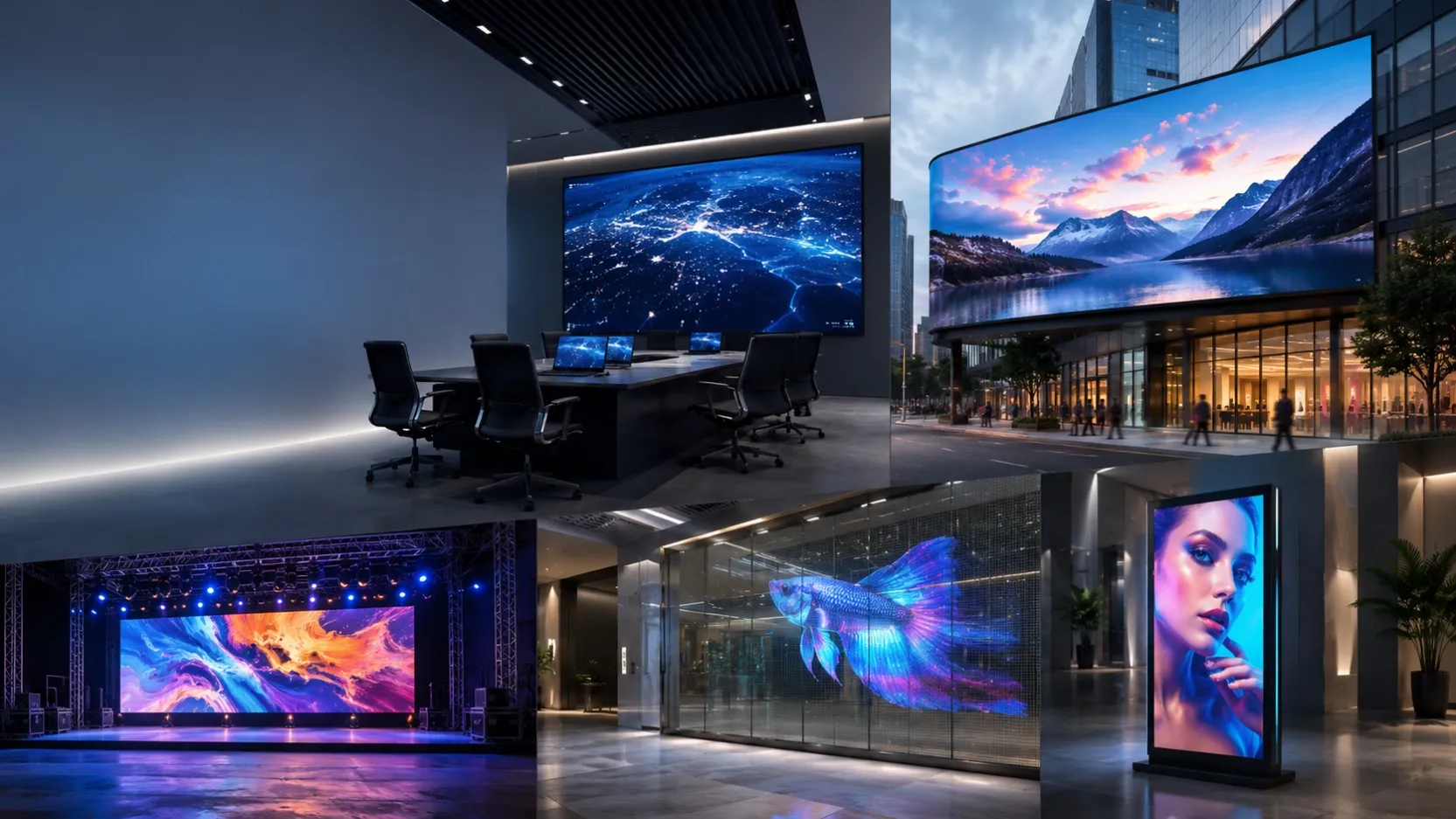
- Outdoor advertising screens
- General indoor LED displays
- Rental stage screens
🟩 2. What is COB LED Display?
COB (Chip-on-Board) LED technology integrates LED chips directly onto the PCB and covers them with a protective resin layer.
This creates a smoother and more durable display surface.
✔ Key Features of COB:
- Ultra fine pixel pitch (P0.9–P1.56)
- Seamless and smooth surface
- Strong protection against impact and dust
- High stability and longer lifespan
📍 Typical Applications:
- Control rooms
- Conference rooms
- High-end retail
- Broadcast studios
- Command centers
🟨 3. COB vs SMD LED Display Comparison
Feature | COB LED | SMD LED |
|---|---|---|
Image Quality | ⭐⭐⭐⭐⭐ | ⭐⭐⭐ |
Durability | ⭐⭐⭐⭐⭐ | ⭐⭐⭐ |
Pixel Pitch | Ultra fine (P0.9–P1.5) | Wider range |
Maintenance | Front service | Module replacement |
Cost | Higher | Lower |
Application Level | High-end indoor | General usage |
👉 COB is designed for premium indoor applications, while SMD is more suitable for general or cost-sensitive projects.
🟧 4. Performance Difference in Real Applications
✔ COB Advantages in Real Projects:
- No visible pixel structure at close viewing distance
- Better color uniformity
- More stable performance in 24/7 environments
- Higher protection against physical damage
✔ SMD Advantages:
- Lower initial investment
- Easier and cheaper replacement
- Widely available in all market segments
🟥 5. Which One Should You Choose?
The choice depends on your project requirements:
✔ Choose COB LED if:
- Viewing distance is very close (<3 meters)
- You need ultra-high image quality
- The project is high-end (control room / boardroom)
- Long-term stability is important
✔ Choose SMD LED if:
- Budget is limited
- Project is general advertising or rental
- Maintenance flexibility is required
- Viewing distance is longer
🟪 6. Industry Trend
The LED industry is gradually shifting toward COB technology in premium indoor applications.
This is driven by:
- Increasing demand for higher resolution
- More professional control room applications
- Higher expectations for visual quality
- Lower long-term maintenance cost requirements
However, SMD technology still dominates the market due to its cost advantage and flexibility.
🟦 Conclusion
COB and SMD LED displays are not competitors, but solutions for different application levels.
👉 COB = Premium high-end indoor solution
👉 SMD = Cost-effective general solution
The best choice always depends on your project environment, viewing distance, and budget strategy.
📩 CTA
If you are planning an LED display project, we can help you evaluate the most suitable solution based on your requirements:
- Application type
- Viewing distance
- Budget range
- Installation environment
👉 Contact us for professional LED display solution consultation.